
Susquehanna River
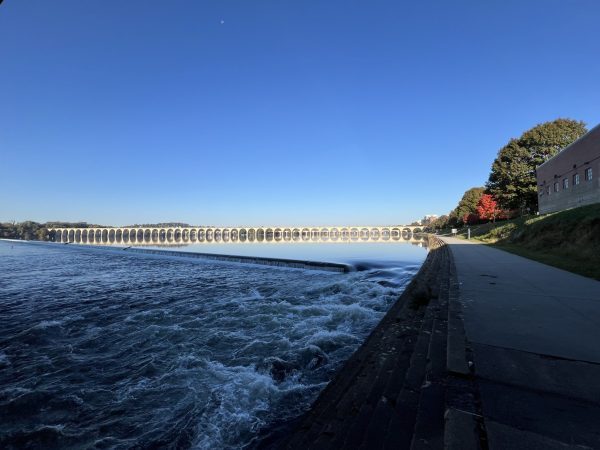
The Susquehanna River had its start about 340 million years ago, long before people existed. Over the next 40 million years, land that is now eastern North America collided with what is now Africa and formed the Appalachian Mountains. This new mountain range redirected the Susquehanna’s flow to run southeast. Over time, the continents drifted apart and created the Atlantic Ocean.
The Susquehanna, as we know it today, runs 444 miles from Ostego Lake, Cooperstown, NY, to Havre de Grace, Maryland, where it empties into the Chesapeake Bay, contributing about half of the Bay’s fresh water inflow. It is the nation’s 16th largest river, the longest river on the east coast, and the longest non-navigable river in the country. It has two main branches, the North Branch from Cooperstown and the West Branch which rises in western Pennsylvania and joins the North Branch in Northumberland, Pennsylvania.
The Susquehanna drains 27,500 square miles of countryside, including nearly half of the land area of Pennsylvania. It is one of the world’s oldest rivers (an estimated 250 million years older than the Nile) and one of the few rivers that cuts directly through mountains. It is estimated it eats away about one meter of bedrock every 1000 years.
History shows that ferries, like the Harris Ferry created in 1719, opened areas to the west of the Susquehanna to development. In the 1830s, river water was diverted to fill a branch of the Erie Canal. During the Civil War, Confederate troops reached but never crossed the Susquehanna. The 1972 flooding from Hurricane Agnes sent so much fresh water into the Chesapeake Bay, much of the marine life that depended on saltwater perished. And 1979 saw what was then the world’s worst nuclear accident at Three Mile Island.
The timber industry boomed in the mid-19th century in Williamsport and huge rafts of logs floated downstream for milling. In 1866 some businessmen acquired 91 acres on the east bank of the river and formed the Pennsylvania Steel Company. By the end of the century, 16,000 called Steelton home and the steel made there ended up in railroad tracks, skyscrapers, and bridges throughout the world. In the middle of the 20th century, millions of tons of hard coal were dredged off the river’s bottom between Harrisburg and the anthracite coal mines of northeastern Pennsylvania.
The river’s name may be from an Algonquin word meaning “muddy river” or a Lenape word meaning “oyster river.” Unfortunately, due to dams south of Harrisburg, oysters are no longer found this far north. Still, the fish and wildlife found in and along the river, and the parks, trails, and picturesque towns along its banks, make it a treasure enjoyed by multitudes.
An article by Bill Cologie.
Did you enjoy this article? Consider donating to our Buckle the Belt fundraiser.
Along the Greenbelt is produced by the Capital Area Greenbelt Association in cooperation with The Historical Society of Dauphin County.